
9 min read · Updated 2026-09-26
How to support a child on a hard homeschool day
On a hard homeschool day, shorten the job, add a snack, and switch the task. Support is not a lecture about grit.
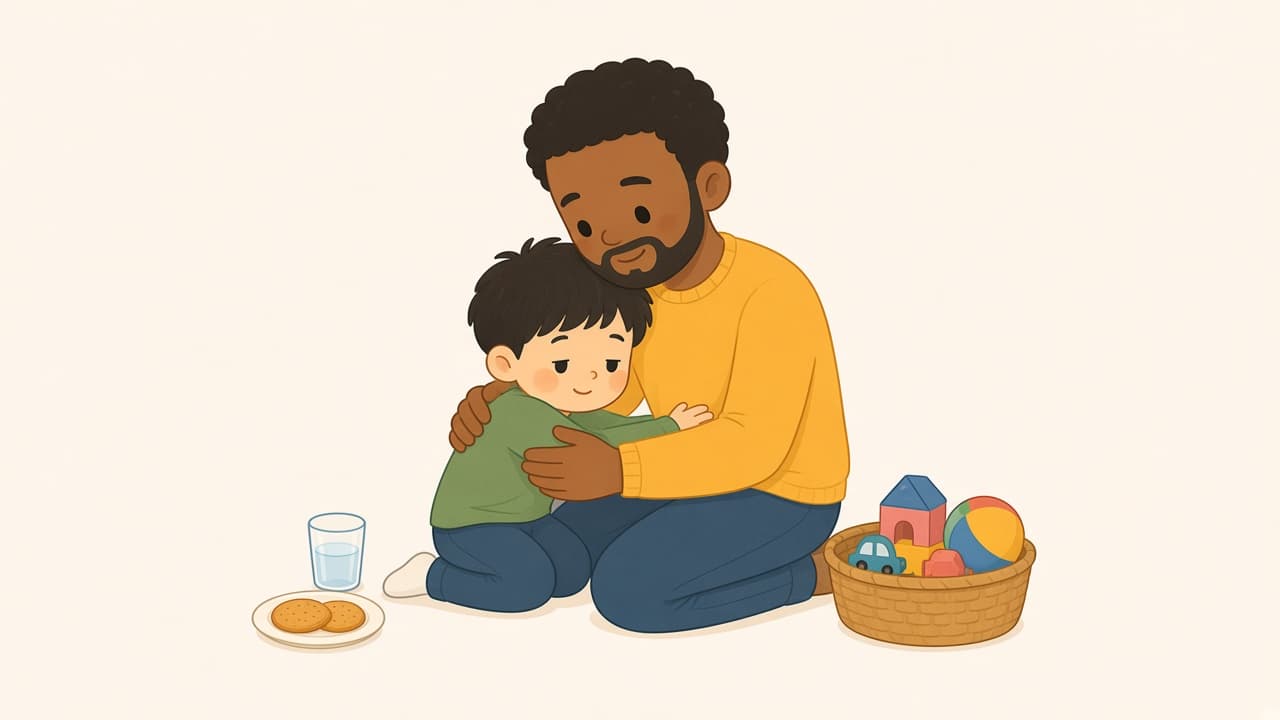
Reset a hard morning
- Stop the job that exploded. Offer water or a snack first.
- Pick a shorter, finishable task: a three-minute sound hunt, toys to bed, or sharing a snack.
- Sit next to them, not across like a test. Do the first step yourself.
- If they refuse, say you will try a different one after a drink, and mean it.
- Tomorrow, do not repeat the thing that exploded. Pick a different skill or a life job from Do.
Make the day small on purpose
On a hard homeschool day, support looks like a shorter job, a snack first, and a softer task. Putting toys to bed, or sitting with a drink, is enough.
You searched this because something already went sideways. Tears over a letter. A sibling fight. You slept badly. The house is loud. Adding a proper lesson on top of that is how you both remember the day as a failure.
A hard day is not proof that homeschooling was a mistake. It is proof that you live with a small person. School buildings have hard days too. They just hide them behind a timetable. You see yours up close. That is uncomfortable. It is also information.
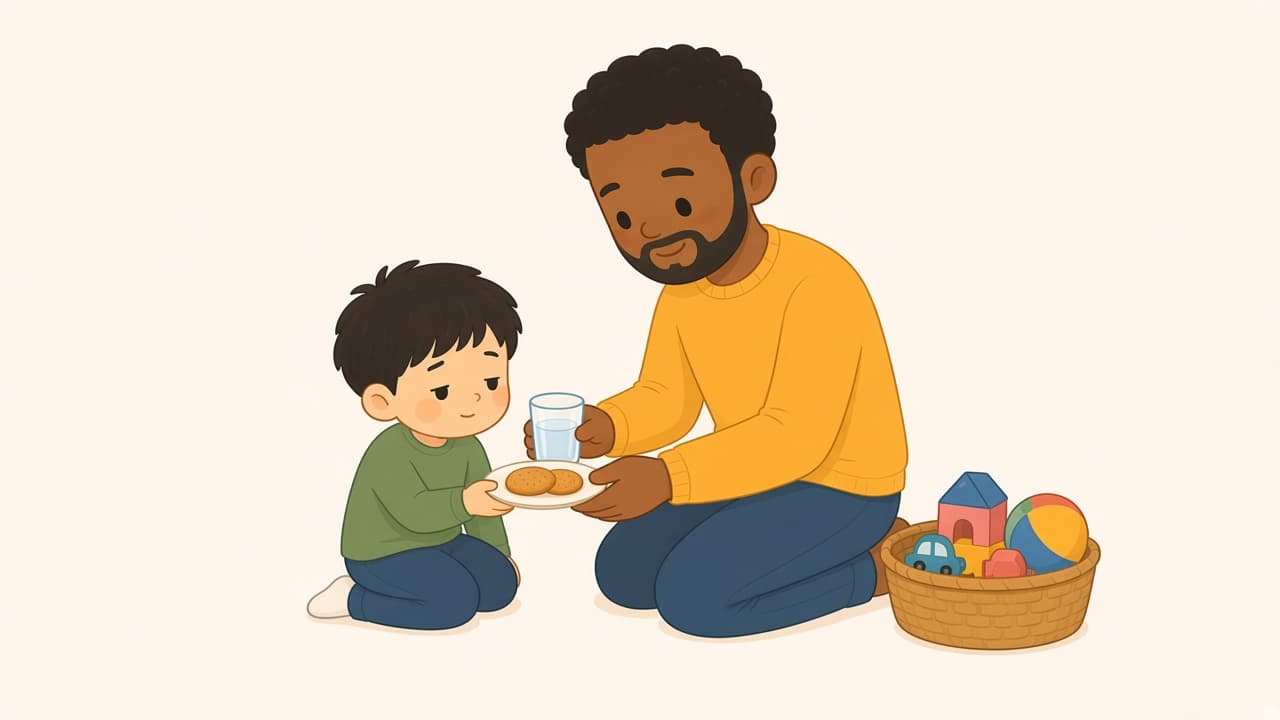
Change the job, not the child
If writing is the fight, switch to air writing or a walk to find a letter on a sign. If counting is the fight, share a snack (one for you, one for me) and stop.
The skill can wait a day. The relationship cannot be postponed until you get through the plan.
- Shorter than yesterday.
- Something they can finish.
- Your voice quieter than you think.
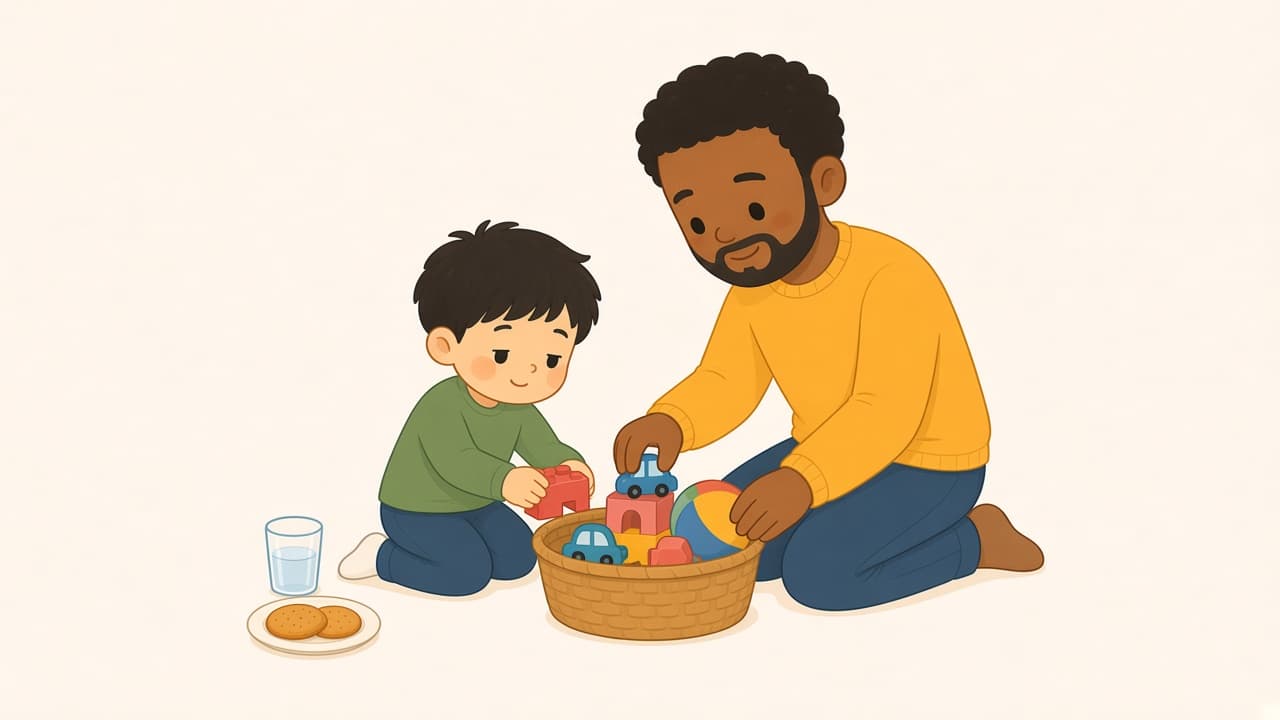
You are support, not the enemy
Sit next to them, not across like a test. Do the first step yourself. Let them do the second.
If they refuse, you can say we’ll try a different one after a drink, and mean it. Empty threats teach them not to believe you.
If hard days are most days, and you are worried about hearing, vision, sleep, or language, that is bigger than a blog. Talk to someone who can actually see your child. Early Homeschool is the next ten minutes, not a diagnosis.
Support also means supporting yourself. A parent who has not eaten will not run a gentle sound hunt. You get a snack too. That is not a joke. If you are snapping at every request, the activity is not the problem. Pause the block. Drink water. Come back later or tomorrow.
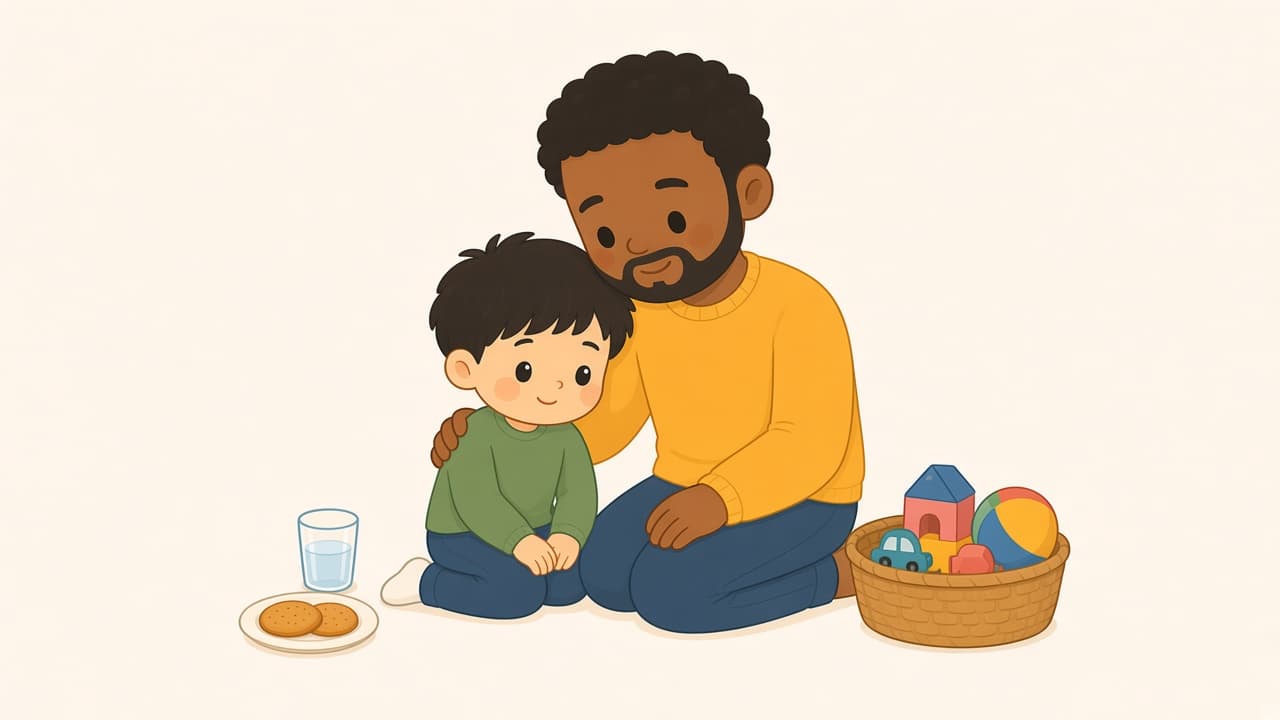
Tomorrow is a different activity
Do not repeat the thing that exploded. Pick a different skill, or a life-skills job that feels like helping, not school. Put toys to bed. Wash hands with a silly song. Copy a clap pattern.
That still counts as a homeschool day. Anyone who says otherwise is not in your kitchen.
If tomorrow is also hard, go outside. The activity can be naming three things you see. Then you come in. You do not owe the internet a recovered schedule by Friday.
How to support kids during homeschooling, on the days that work, is mostly the same as the hard days. Sit close. Keep it short. Stop while they still like it. The difference is you notice the wobble earlier and change the job before anyone cries. That is skill. It is not a personality.
Questions parents ask
What should I do when a homeschool morning falls apart?
Lower the bar until it is honest. Three minutes, a snack, or putting toys to bed still counts. Adding a proper lesson on top of tears is how both of you remember the day as a failure.
Should I push through tears to build grit?
Change the job, not the child. The skill can wait a day. The relationship cannot be postponed until you get through the plan.
When is a hard day bigger than a blog?
If hard days are most days, and you are worried about hearing, vision, sleep, or language, talk to someone who can actually see your child. Early Homeschool is the next ten minutes, not a diagnosis.
Does a hard day mean homeschooling was a mistake?
No. It means you live with a small person. School buildings have hard days too. They hide them behind a timetable.
Further reading
Outside sources if you want a second adult voice. Early Homeschool is not those organisations, and they are not us.
Do one of these today
- Let's Put Toys to Bed
Age 3 · 10 min
- Let's Hunt for Sounds
Age 3 · 10 min
- Let's Copy a Pattern
Age 4 · 10 min
More short reads in Guides.