
9 min read · Updated 2026-09-26
Kitchen math: counting and comparing with cups and spoons
Kitchen math is counting, comparing, and sharing with spoons, cups, and snack pieces. You already open that drawer three times a day.
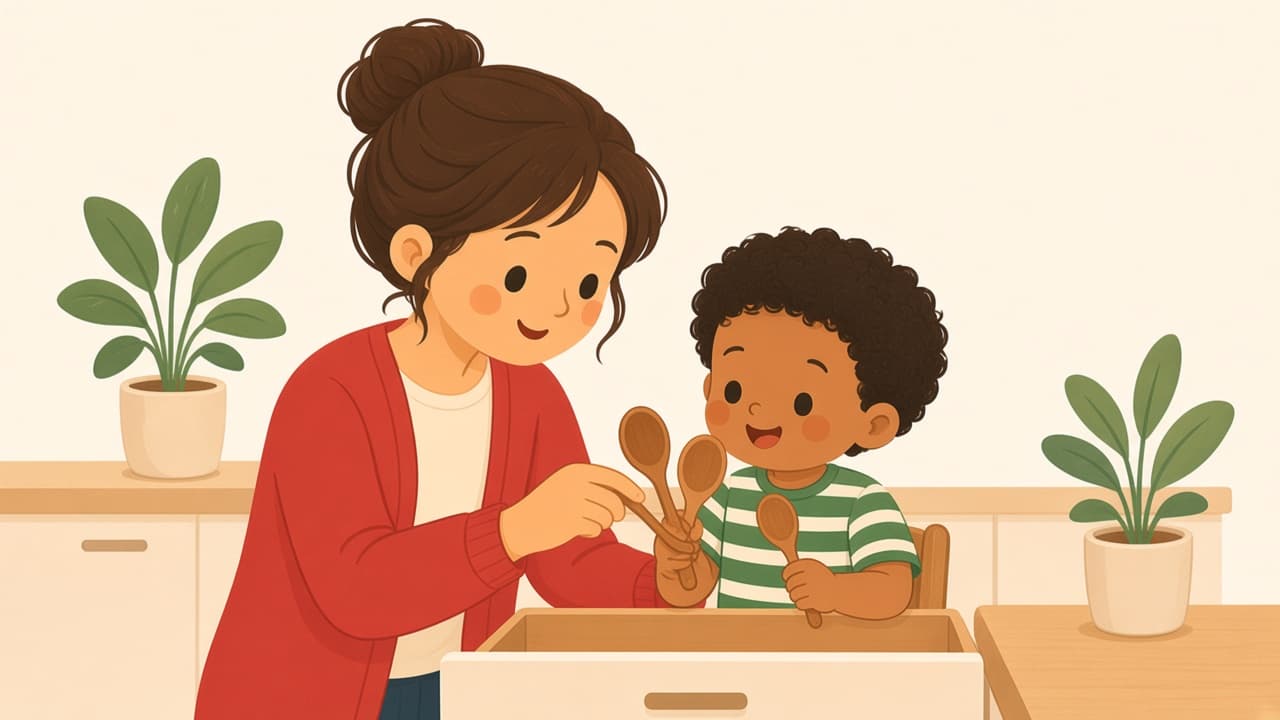
Do kitchen math in one sit
- Open the drawer. Take spoons, cups, or snack pieces you can put back.
- At 3–4: count five spoons, touching each one, then make a big pile and a small pile.
- At 5–6: compare 5 spoons and 3 cups, then make both groups equal.
- At 7: double a small number with beans, or plan a pretend $5, £5, or ₹50 treat.
- Stay in the room around water, heat, and anything that can break. Then put the drawer back.
The kitchen is already a maths room
Kitchen math is counting and comparing with cups, spoons, and snack pieces. You do not need a number puzzle. You need groups of things, a chance to touch each one, and a question like which has more? NAEYC’s math-at-home notes match this drawer-first habit.
You open the drawer for a spoon and there it is. Maths, sitting in a pile, waiting to be counted.
Adult supervision is the rule around water, heat, and anything that can break.
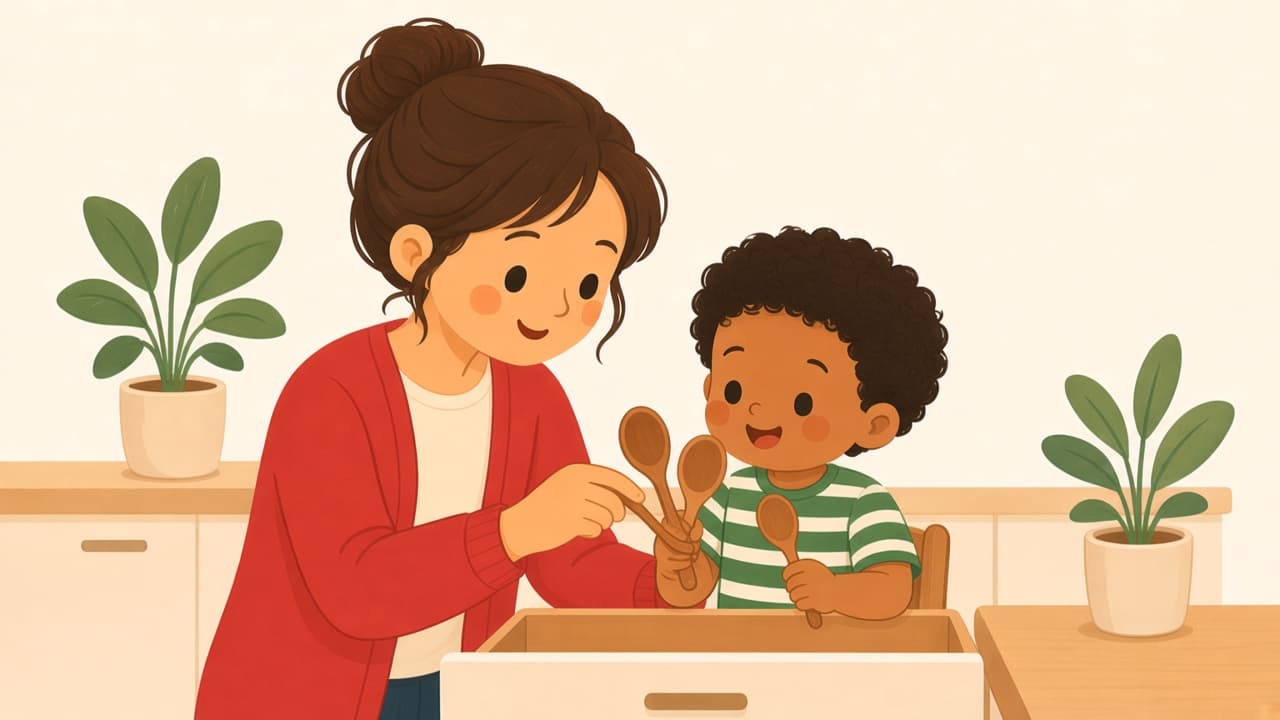
Age 3–4
Count five spoons, touching each one. Make a big pile and a small pile. Share a snack: one for you, one for me. Talk about same and leftover. That is plenty.
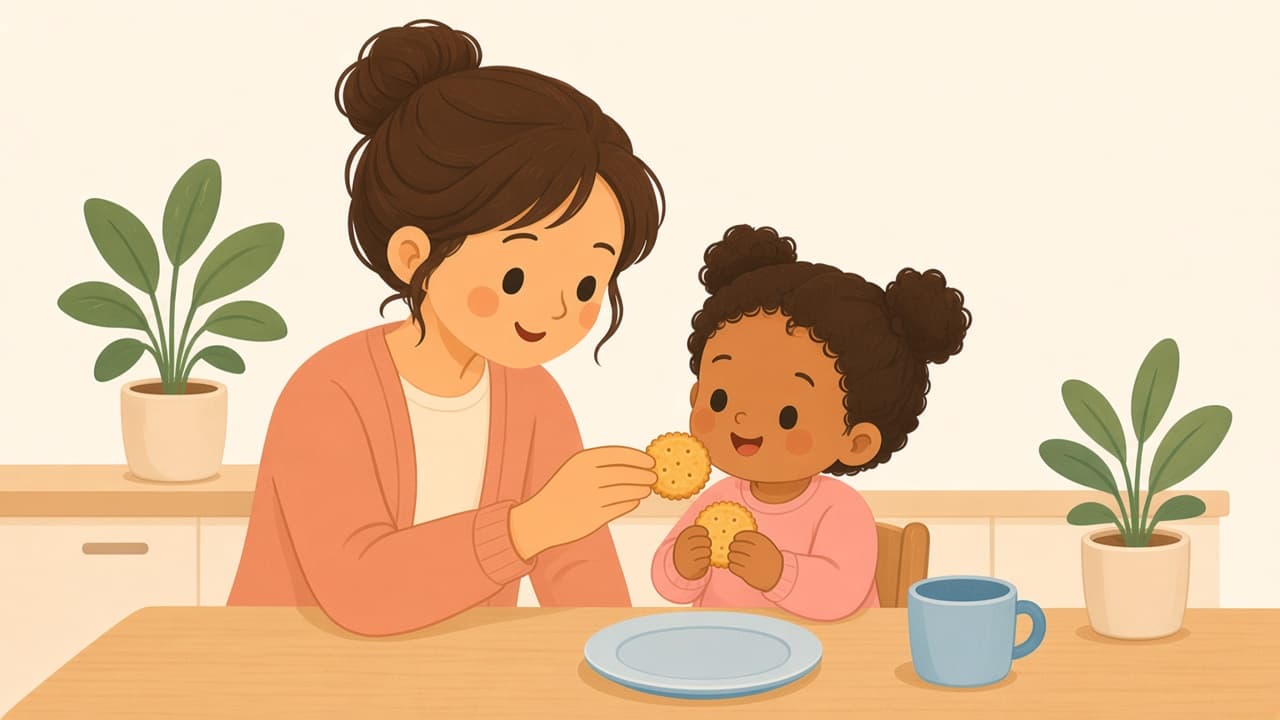
Age 5–6
Compare 5 spoons and 3 cups. Make both groups equal. Split ten spoons into two groups that make ten. Measure a rug in footsteps, then compare it to the bed.
Pretend shop with paper prices of 1, 2, or 3 and bottle-cap coins is a longer game if you have the energy.
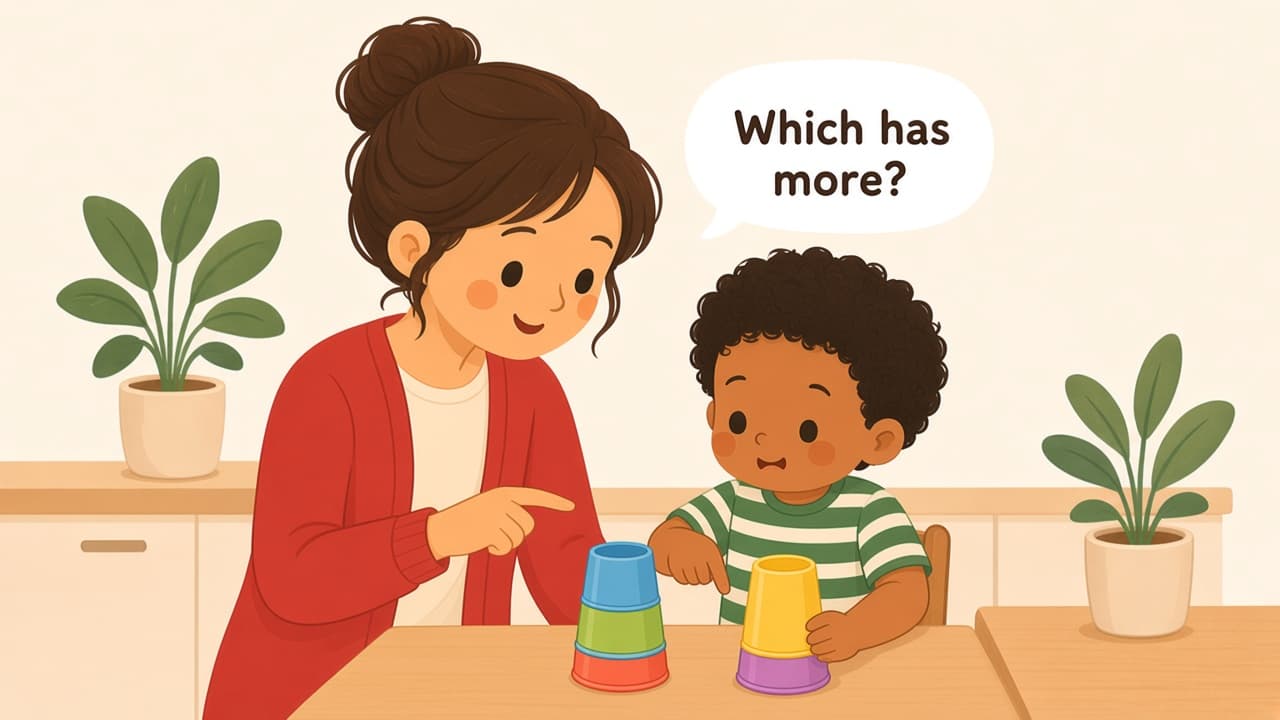
Age 7
Double a number with beans or spoons, then check. Plan a pretend $5, £5, or ₹50 treat with round numbers. No real shopping required.
The point is adding, and changing a choice when the total does not fit.
Keep the language human
Say let’s see which group has more. Not develop numerical cognition.
Your child does not need the jargon. They need you, the spoons, and a finish.
If you want a seated page after the drawer, use simple math worksheets or a numbers sheet. For more object games, open Do and pick Math.
One short number job with things you already own.
Questions parents ask
What is kitchen math?
Counting, comparing, and sharing with real objects from the drawer. Groups of things, a chance to touch each one, and a question like which has more.
Do I need a number puzzle or worksheet?
No. Spoons, cups, plates, and snack pieces are enough. A short numbers page is optional on calm seated days.
What should we practise at each age?
Ages 3–4: count five, big vs small, share a snack. Ages 5–6: compare groups, make ten, measure in footsteps. Age 7: doubling and a pretend budget with round numbers.
How should I talk about it?
Say let’s see which group has more. Not develop numerical cognition. They need you, the spoons, and a finish.
Further reading
Outside sources if you want a second adult voice. Early Homeschool is not those organisations, and they are not us.
Do one of these today
- Let's Count the Spoons
Age 3 · 10 min
- Let's Hunt for Numbers
Age 4 · 20 min
- Let's Make 10
Age 6 · 20 min
More short reads in Guides.