
9 min read · Updated 2026-09-26
Notebooking with a young child (it can be one folded paper)
Notebooking can be a drawing, a word, and a date on folded paper. It is a memory of the day, not a $40 planner with 12 sections.
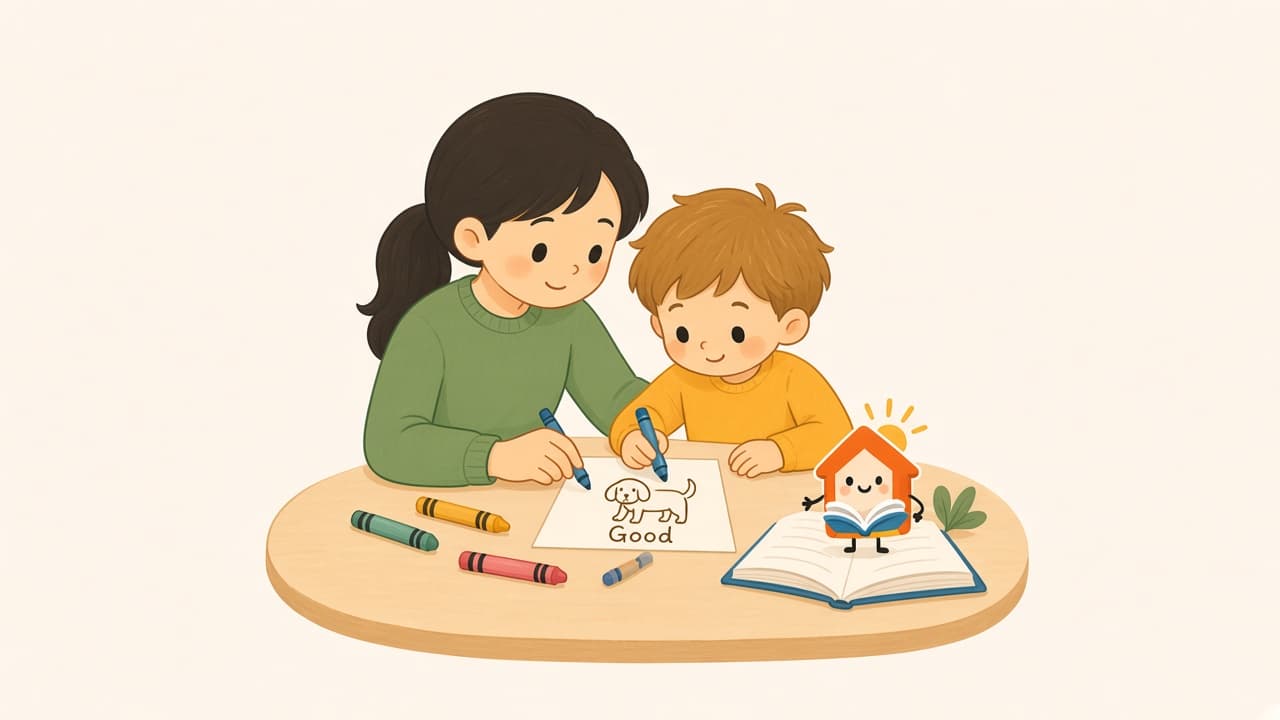
Make a one-page notebook entry
- Fold one sheet of paper in half. Write the date at the top if you want it.
- After a picture walk, kitchen count, or letter hunt, ask them to draw one thing that happened.
- If they want a word, they write it, or you write the sentence they said underneath.
- Stop when the drawing is done, not when the page looks full.
- Drop the page in a cheap folder. Order is optional.
A folded paper still counts
Notebooking with a young child is a drawing, a word, and a date on folded paper. You are keeping a trace of the day, not producing a scrapbook for strangers.
Online, notebooking often means thick paper, washi tape, and a child who will write a paragraph about a butterfly. If your child is four, that photo is a trap.
Older homeschoolers use notebooks to narrate history and science. Fine for them. A young child narrates with a scribble of the dog they saw on the walk. You can write the sentence they said underneath, in your handwriting. That is their thinking. Your job is the pencil they cannot yet control.
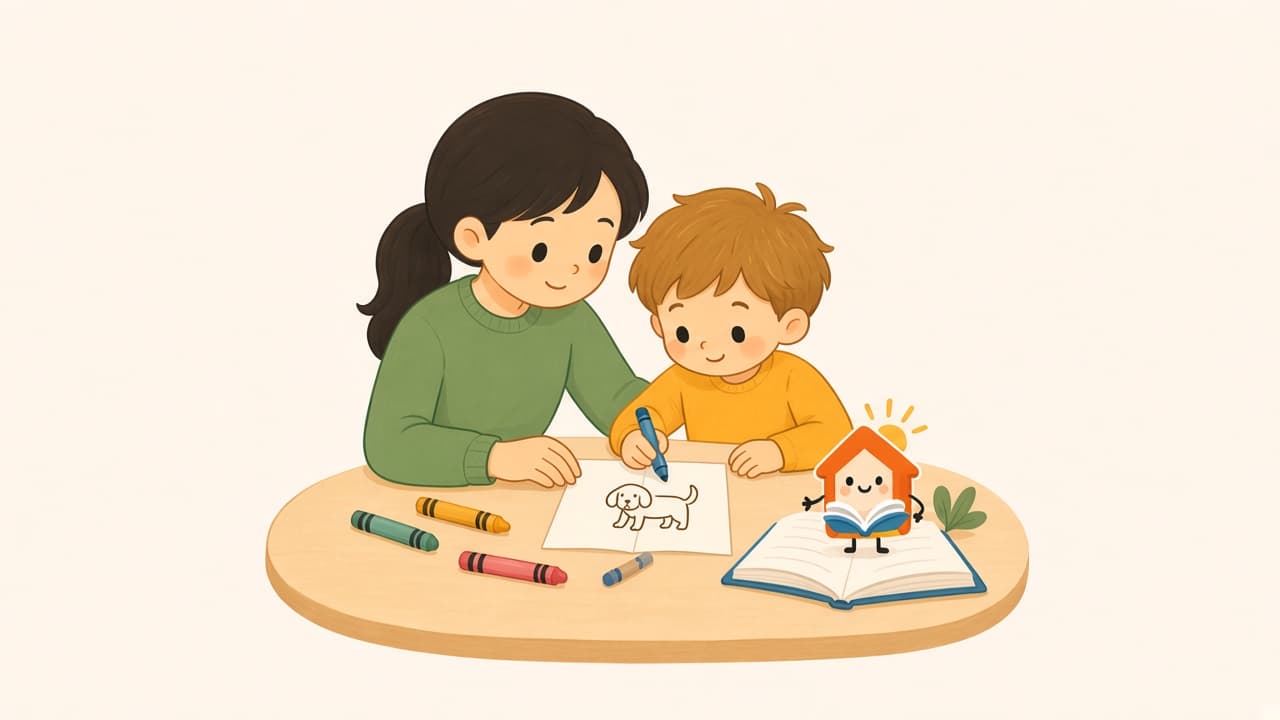
What to put on the page
After a picture walk, they draw the animal they liked. After counting spoons, they make five dots. After a letter hunt, they try the letter once, huge.
Keep it ugly. Pretty notebooks become things nobody wants to mess up, which means nobody uses them.
If they want to draw the same dinosaur four days running, let them. Notebooking is not a unit study. It is a place to put what already happened. You can add the date. You can skip the date. You do not need a table of contents for a four-year-old’s folder.
- One idea per page.
- Stop when the drawing is done, not when the page is full.
- Keep the pages in a cheap folder. Order is optional.
You do not need the ultimate planner
Planners help some adults feel the week. They do not teach a five-year-old to notice a letter on a milk carton.
If a calendar on the fridge is enough for you, use that. If empty boxes make you anxious, skip the planner and do one activity, then one page.
Early Homeschool will not sell you a planner. We would rather you finish today. Notebooking with a young child is a memory aid, not a product category. A folded paper in a kitchen drawer beats a $40 binder you are scared to open.
If a planner actually helps you show up, use a cheap one or a calendar app. The child still does not need matching stickers. Adult organisation and child notebooking are different piles. Do not make them share a $40 system.
When to skip the notebook
If they are hungry, furious, or halfway out the door, do not open the folder. Do the activity with spoons. The notebook can wait until a calmer afternoon, or never. The learning happened with the spoons.
If writing is the fight, you draw, they tell you what to label. If drawing is the fight, they dictate a three-word list and you write it. Notebooking is a container. It is not a second year of work you failed at because the page is blank.
Once a week is enough. Daily pages are a hobby some families like. They are not a requirement for a good homeschool morning. If the folder lives under a pile of laundry for a month, the child did not unlearn the spoons.
If you want a short paper sit instead of a memory page, use one tracing sheet and stop after a few rows.
Questions parents ask
What is notebooking for a young child?
A drawing, a word, and sometimes a date. Older students use notebooks to narrate history. A four-year-old narrates with a scribble of the dog from the walk.
Do I need a special notebook or planner?
No. Folded paper in a kitchen drawer beats a $40 binder you are scared to open. Adult planners and child pages are different piles.
How often should we notebook?
Once a week is enough. Daily pages are a hobby some families like. They are not a requirement for a good morning.
What if my child refuses to write or draw?
You draw and they tell you what to label, or they dictate three words and you write them. Skip the folder on hungry or furious days. The learning already happened with the spoons.
Further reading
Outside sources if you want a second adult voice. Early Homeschool is not those organisations, and they are not us.
Do one of these today
- Let's Write a Tiny List
Age 5 · 20 min
- Let's Read the Pictures
Age 3 · 20 min
- Let's Trace My Name
Age 4 · 20 min
More short reads in Guides.